INTRO
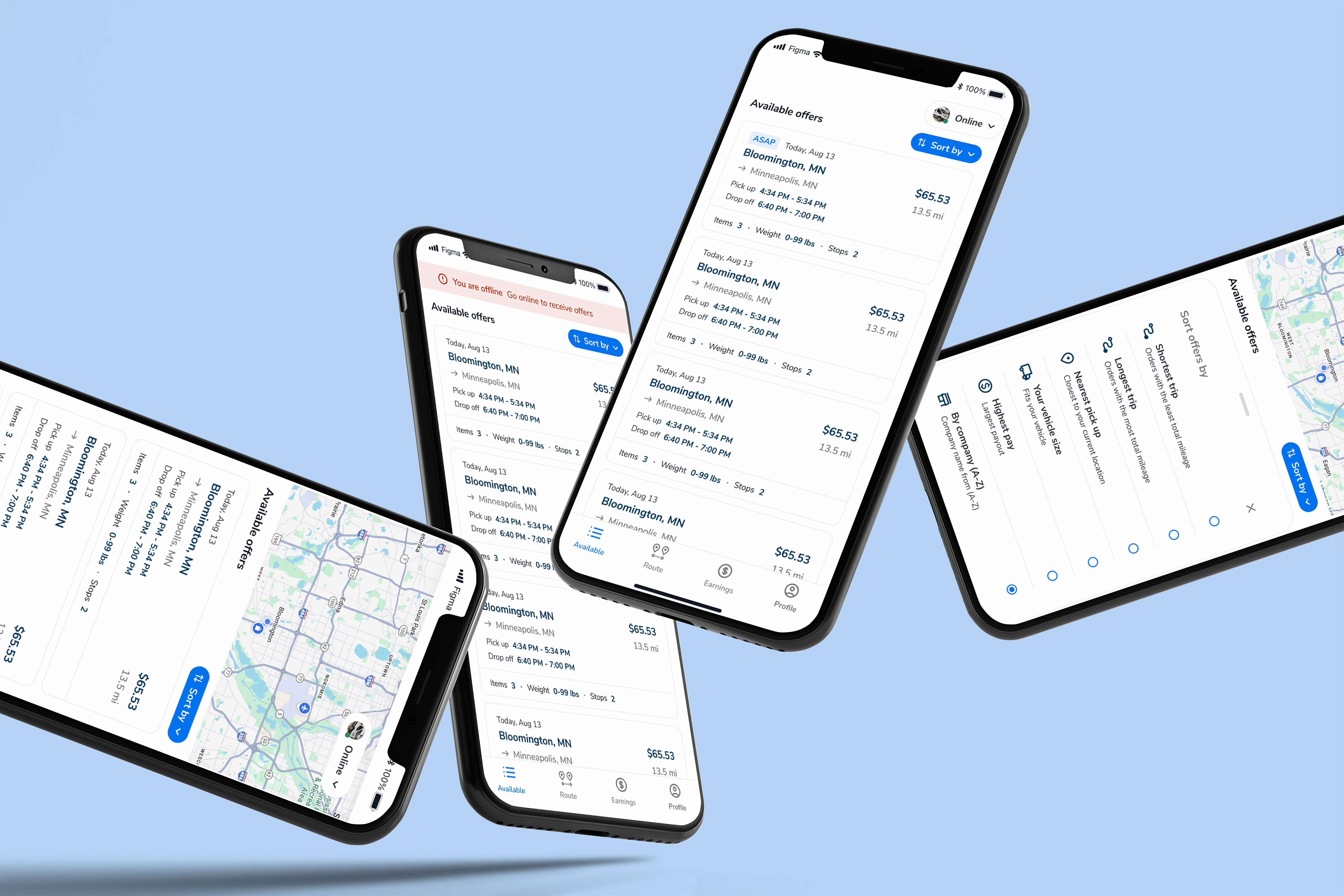
As a UX Design Intern at DispatchIT, I led the redesign of the company's mobile driver app. Dispatch's app had no way to support drivers who operate multiple vehicles — a core part of how their users actually work. Vehicles couldn't be added, managed, or switched without going through support, incoming offers couldn't be paused mid-order, and missing vehicle details led to mismatched loads and failed pickups.
I owned the end-to-end redesign, partnering with internal stakeholders for research. The solution introduced an AI-powered vehicle onboarding flow with automatic image-based vehicle detail capture, a unified Profile and Settings hub, self-service multi-vehicle management, and a streamlined way to go offline or pause incoming offers.
CATEGORIES
UX DESIGN | B2B LOGISTICS| APP DESIGN
YEAR
2026


PROCESS
I started with research — running a competitor analysis of last-mile logistics and gig-driver apps, collecting pain points directly from drivers and stakeholders, and looking into what the last-mile logistics demographic actually looks like.
To help with this, I built two AI agents: one that scanned through research notes and driver feedback to highlight important, recurring user issues, and another that created interactive user personas based on our internal data and driver conversations. I also built a WCAG accessibility checker agent so I could check my designs against AA standards as I went, instead of waiting until the end.
After research, I moved into brainstorming what features Dispatch's app should have for handling multiple vehicles, and started sketching and building out wireframes.


PROCESS
Next, I brought my wireframes to internal stakeholders for feedback. I took that feedback and revised the prototypes, then ran usability testing and interviews with four drivers to see how the flows actually held up in practice.
Testing surfaced a handful of refinements, which I folded back into the design before presenting the final high-fidelity prototypes to internal stakeholders, including the company's CEO. The designs were approved and ready for handoff by the end of my internship; development was slated to begin once the engineering team's capacity opened up.